Language Lessons

Local Language Introduction
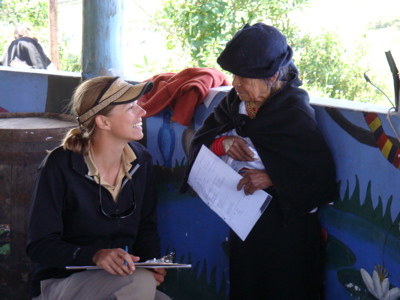
Learning even a few words of a people's native language can go a long way toward showing your good will, respect, and desire to learn. It can mean a great deal to people, especially those who speak a relatively small language that few foreigners learn. It also makes possible verbal interactions with segments of the local population, such as women or the elderly, who aren't educated in the colonial language or English. Plus, it's fun!
Most Tandana volunteer programs include very basic language lessons to help you interact and show your interest in local culture. Don't worry about making mistakes! People appreciate the fact that you're trying, and if you do mess up, it's an opportunity to laugh, share a joke, and become closer to local people. We've put an introduction to Kichwa and Spanish (for those of you going to Ecuador) and Tommo So (for those of you going to Mali) on this website, so that you can study before you go, review after your trip, or just for those who are interested. Enjoy!
Spanish in Highland Ecuador
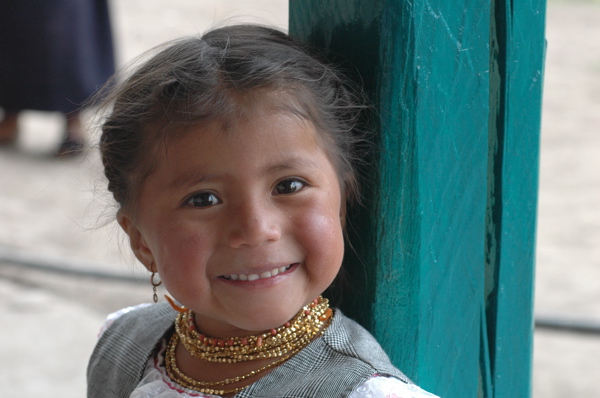
As in many Latin American countries, the most commonly spoken language in Ecuador is Spanish. With that being said, each country has its own local slang and pronunciations that make it's Spanish unique. Ecuador is no exception and has a wonderful variety of slang words and idioms that when said can give you away as speaking the Ecuadorian way. This list is by no means comprehensive but is a great start to get to know how the language is used. Beginners will find this useful as they start learning the language and even fluent Spanish speakers who are not from Ecuador have much to learn! Remember to have fun! Also, be sure to check out our page about speaking Kichwa, the indigenous language spoken by many people in highland Ecuador.
** The audio files may not work with all browsers. If yours is not working try Google Chrome.**
Ways to say “Thank You” and "You're Welcome"
Gracias -Thank You | |
Dios le pague -May God pay it (back to you) | |
De nada-You're welcome |
Greetings
Hola-Hello | ||
Buenos días-Good morning | ||
Buenas tardes -Good afternoon | ||
Buenas noches-Good evening / Good night | ||
¿Cómo te va?-How's it going? (informal) | ||
¿Cómo le va?-How's it going? (formal) | ||
¿Cómo estás?-How are you? (informal) | ||
¿Qué tal?-What's up? or How's it going? | ||
¿Qué más?-What's up? What's going on? | ||
¿Cómo has pasado?-How have you been? (informal) | ||
¿Cómo ha pasado?-How have you been? (formal) | ||
¿Cómo amaneciste? -How did you sleep? Literally, how did you wake up? (informal) | ||
¿Cómo amaneció? -How did you sleep? Literally, how did you wake up? (formal) | ||
Bien-Well | ||
Mal-Bad | ||
Normal-Normal | ||
Aqui no más-Fine | ||
Muy bien-Very well | ||
¿Cómo te llamas? -What's your name? (informal) | ||
¿Cómo se llama? -What's your name? (formal) | ||
Me llamo Margarita -My name is Margarita. | ||
¿Cuántos años tienes? -How old are you? (informal) | ||
¿Cuántos años tiene? -How old are you? (formal) | ||
Tengo 27 años -I'm 27 years old. | ||
¿Adónde te vas? -Where are you going? (informal) | ||
¿Adónde se va? - Where are you going? (formal) | ||
¿Para dónde? -Where are you headed? (Literally, for where? Often used simply as greeting or conversation starter…) | ||
¿De dónde eres?-Where are you from? (informal) | ||
¿De dónde es? -Where are you from? (formal) | ||
Soy de Ecuador -I'm from Ecuador | ||
De Estados Unidos -From the USA |
Basic Vocabulary
|
Bienvenido(a)(s) -Welcome (according to who / how many people are being welcomed) | |
Mamá (Madre) -Mom (Mamá is more common than Madre) | |
Papá (Padre) -Dad (Papá is more common than Padre) | |
Hermano(a)(s) -Brother, Sister, Siblings, Brothers, Sisters | |
Hijo(a)(s) -Son, Daughter, Sons, Daughters, Children | |
Amigo(a)(s) -Friend, Friends | |
Casa -House | |
Montaña -Mountain | |
Lago -Lake | |
Cascada -Waterfall | |
Rio -River | |
Mujer -Woman | |
Hombre -Man |
Farewells
Que te vaya bien -Hope it goes well! Have a good one! "May it go well for you" (informal) | |
Que le vaya bien -Hope it goes well! Have a good one! "May it go well for you" (formal) | |
Que pases bien -Hope it goes well! Have a good one! Literally, "may you go well" (informal) | |
Que pase bien -Hope it goes well! Have a good one! Literally, "may you go well" (formal) | |
Chao -Bye | |
Nos Vemos -See you later (Literally, we are seeing each other) | |
Hasta Luego -See you later |
Words and Phrases for Navigating the City
Siga, no más -Go right ahead | |
Pase, no más -Go right ahead | |
¿Dónde está? -Where is it? | |
Con permiso -Excuse me | |
Perdón -Oops, sorry! | |
Disculpe -Excuse me; oops, sorry! | |
Cuadras -City blocks | |
Calle -Street | |
Dirección -Address; direction | |
Parada de bus -Bus stop | |
Aquicíto -Right around here | |
Abajo -Down over there | |
Arriba -Up over there | |
Allacíto -Right over there |
Food
Comida -Food | |
Que rico!-Mmmm, how delicious! | |
Comer -To eat | |
Cuy -Guinea pig (delicacy of Andean Kichwa cuisine) | |
Carne -meat (normally refers to beef) | |
Pollo -Chicken | |
Pescado -Fish | |
Papas -Potatoes | |
Verduras -Vegetables | |
Arroz -Rice | |
Pan -Bread | |
Fruta -Fruit | |
Desayuno (Desayunar) -Breakfast (to eat breakfast) | |
Almuerzo (Almorzar) -Lunch (to eat lunch) | |
Cena (Cenar) -Dinner (to eat dinner) | |
Merienda (Merendar) -Dinner (to eat dinner) |
Conversation and Idioms
A-a -Yes, gotcha (commonly heard in highland Ecuador as an affirmation in conversation | |
Ella sabe tomar café en la mañana -She normally drinks coffee in the morning. ("Saber" is used as a way to express "normally" or "usually."') | |
¿Mande? -Come again? Repeat, please? (Very respectful, formal, and common, way to ask someone to repeat him/herself. | |
Te enseñas aqui? -Do you like it here? (informal) | |
Se enseña aqui? -Do you like it here? (formal) | |
Me da frío -I'm cold (This is a common sentence structure to say: "Tengo frío") | |
Espanto -Fright (a sickness of both body and spirit) | |
Chévere -Cool! | |
-ito (Pancito) -Word ending that can be added to show endearment or small size; in this case: Small bread | |
-azo (Buenazo) -Word ending that can be added to show big size or amplify the meaning of a word; in this case: Super Awesome | |
-ote (Grandote) -Word ending that can be added to show big size; in this case: Ginormous | |
De una (vez) -Right now; at the same time; or right on | |
De ley -Absolutely | |
Bacán -Cool! |
Time
¿Qué hora es? -What time is it? | |
¿A qué ahora? -At what time? | |
¿Cuándo empieza? -What time does it start? | |
¿Cuánto tiempo demora? -How long does it take? | |
¿Cuál es la fecha? -What's the date? | |
¿En cuál fecha? -On what date? | |
Ya mismo -Right now (a very relative sense of time, meaning sometime soonish | |
Ahora -Some time today | |
Ahorita -Right now (normally sooner rather than later...) |
Weather and Crops
Llover -To rain | |
Lluvia -Rain | |
Sol -Sun | |
Hace...(sol) (calor) (frio) (viento) -It's...(sunny) (hot) (cold) (windy) | |
Sembrar -To plant | |
La Siembra -The planting; the entire crop that has been planted | |
Cosechar -To harvest | |
La Cosecha -The harvest | |
Maíz -Corn | |
Choclo -Fresh corn (on the cob) | |
Terreno -Plot of land (normally used for crops) | |
Chagra -Plot of land (used for crops) | |
Vivero -Nursery (for plants) | |
Flor -Flower | |
Semilla -Seed | |
Planta -Plant | |
Raices -Roots | |
Árbol -Tree | |
Tierra -Earth, dirt | |
Abono -Fertilizer |
Verbs and Conjugation
Irregular, Often Used Verbs
Saber: Sé, sabes, sabe, sabemos, saben -To know | |
Ser: Soy, eres, es, somos, son-To be | |
Estar: Estoy, estás, está, estamos, están-To be (location, temporary condition) | |
Ir: Voy, vas, va, vamos, van -To go | |
Tener: Tengo, tienes, tiene, tenemos, tienen -To have |
Regular Present -ar Verbs
Hablar (-o, -as, -a, -amos, -an)-To talk; To speak | |
Tomar -To take; To drink | |
Demorar -To take up time | |
Trabajar -To work |
Regular Present -er Verbs
Correr (-o, -es, -e, -emos, -en) -To run | |
Coger -To pick up, to grab, to catch | |
Aprender -To learn | |
Vender -To sell |
Regular Present -ir Verbs
Escribir (-o, -es, -e, -imos, -en) -To write | |
Sentir-To feel | |
Dormir-To sleep | |
Corregir -To correct |
Medical Care Vocabulary
Siéntese -Take a seat | |
Acuéstese -Lie Down | |
Abre la boca -Open your mout | |
Cierre la boca -Close your mouth | |
Levántese -Stand up | |
Espere un ratito -Wait just a moment | |
¿Alguna vez un medicamento le ha hecho daño? -Do you have any medical allergies? (Literally, has any medicine ever done you harm?) | |
¿Alguna vez un remedio le ha hecho daño? -Do you have any medical allergies? (Literally, has any medicine ever done you harm?) | |
¿Desde cuando le sabe doler? -How long has it been hurting? | |
¿Tiene la cédula? -Do you have your ID card? | |
Comezón -Itching | |
Alérgia -Rash (Less common, allergy) | |
Picar -To sting; to prick; to bite | |
Arder -To burn | |
El Jarabe -The syrup (in this case, medicinal syrup) | |
La Pastilla -The pill | |
La Cintura -The waist | |
Los Oídos -The inner ears | |
El Hígado -The liver | |
Los Riñones -The kidneys | |
La Vista -The vision; sight | |
La Barriga -The stomach; belly |
Classroom Vocabulary
Colores -Colors | |
Cuaderno -Notebook | |
Pegamento -Glue | |
Escuchen -Listen (plural command) | |
Repiten -Repeat (plural command) | |
Silla -Chair | |
Mesa -Tabl | |
Papel -Pape | |
Lápiz -Pencil; paintbrush | |
Esfero -Ball-point pen |
Construction Vocabulary
Pala manilla -Shovel | |
Pala azadón -Hoe | |
Pico -Pick ax | |
Funda -Bag | |
Carretilla -Wheelbarrow | |
Cemento -Cement | |
Hierro -Iron | |
Clavo -Nail | |
Martillo -Hammer | |
Tejas -Shingles; roofing | |
Sierra -Saw | |
Pintura -Paint | |
Tabla -Board | |
Tubo -Pipe | |
Cuidado! -Be Careful! | |
Hueco -Hole | |
Columna -Pillar; column | |
Arena -Sand | |
Manguera -Hose |
Otavaleño Kichwa
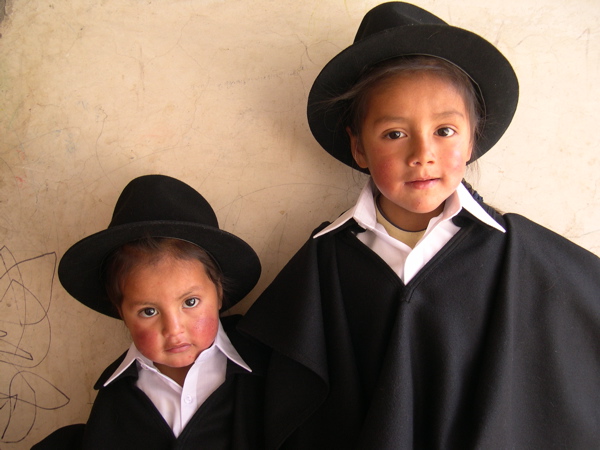
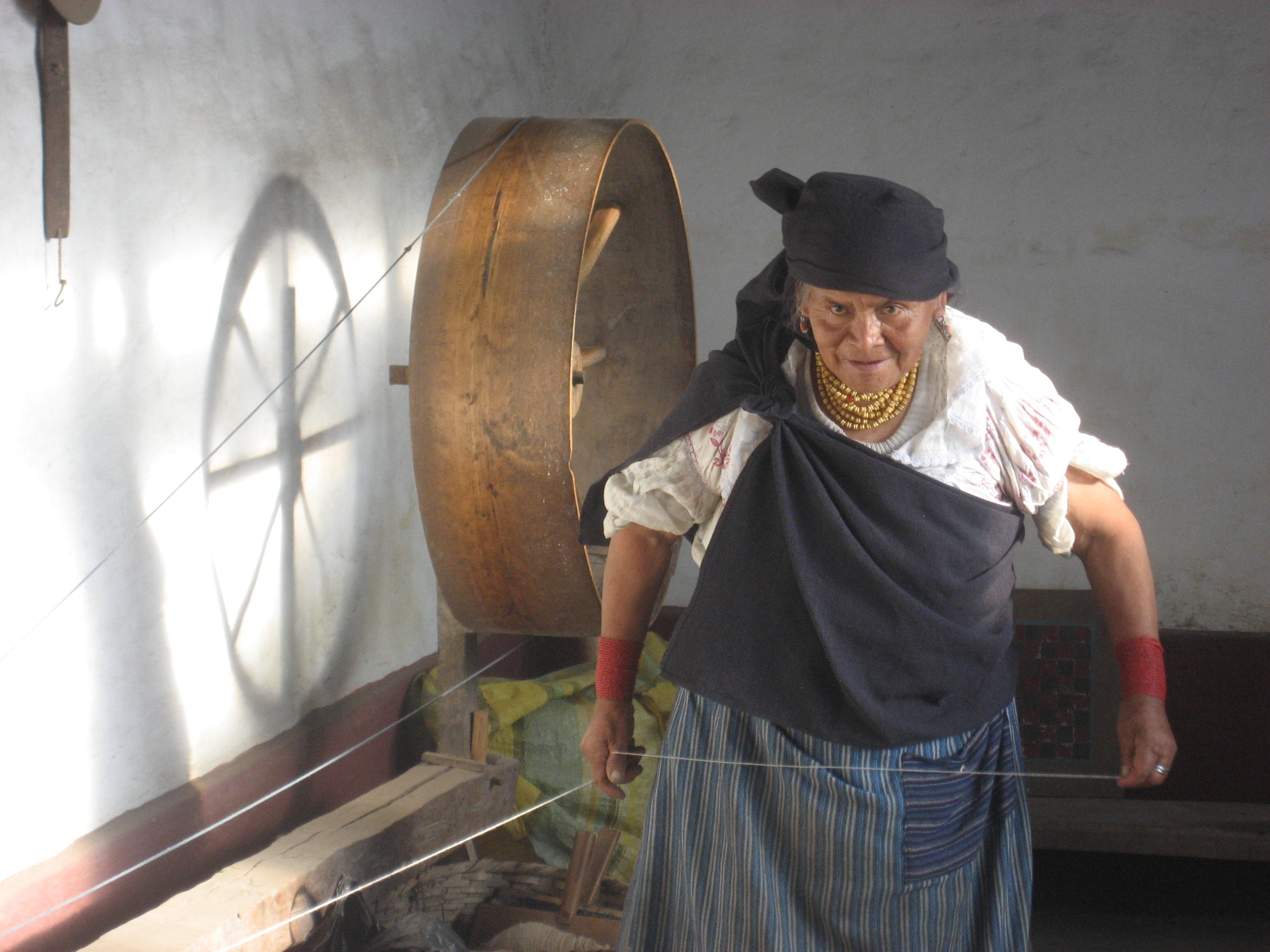
Otavaleño Kichwa is part of the Quechua family of languages, evolved from the Quechua spread by the Incas throughout the Andes. For more information, and to hear some of the fascinating differences and similarities among these languages, visit  The Sounds of the Andean Languages. Varieties of Kichwa differ throughout the Ecuadorian highlands and in the Amazonian region where it is spoken. As the bilingual education movement gained strength, leaders decided to standardize spelling throughout Ecuador (Kichwa Unificado, Shukyachiska Kichwa) in order to facilitate the making of educational materials and strengthen the unity of the movement. Hence the spelling Kichwa, rather than Quichua, which was usually preferred before.
In the communities where we work, Kichwa is often mixed with Spanish, and the majority of people are bilingual. Mestizos in the communities often speak only Spanish, with a bit of Kichwa mixed in. Elders and young children sometimes speak only Kichwa, with some common Spanish words mixed in. There are also some Spanish phrases that have been transformed in Kichwa, such as "Dios le pague" (God pay you), which has become "Yusul pagui", "pagui", and "pai" in Kichwa usage. Indigenous cultural leaders and students sometimes speak a pure Kichwa, but most older community members speak a version with numerous Spanish influences. Speaking a few words of Kichwa when you arrive in one of the communities where we work will impress people and show them that you value their language and culture. If you are inspired to move beyond these basics, visit Kichwa.net.
Greetings, Goodbyes, and Basic Questions
Ali punllaGood morning | ||
Ali chishiGood afternoon | ||
Ali tutaGood evening | ||
Kaya kamanSee you tomorrow | ||
Ashta kashkamanSee you later (ashta is Spanish "hasta") | ||
Shuk punlla kamanSee you another day | ||
Imanalla? How are you? (abbreviated form) | ||
| | AlillaGood (just fine) | |
| | SumakGreat | |
Ima shutitak kanki?What is your name? | | |
| | Ñuka shutika _____mi kan.My name is ____. | |
Maymantatak kanki? Where are you from? | | |
| | Estados Unidosmantami kani.I am from the United States. | |
Mashna watatak charinki?How old are you? | | |
| | Ñukaka ____watata chorine.I am ____ years old. | |
Maymantak rinki?Where are you going? | | |
| | Otavalomanmi ring.I'm going to Otavalo. Wasimanmi ring.I'm going home. Yachana wasimanmi ring.I'm going to school. Hawamanmi rini.I'm going up. |
Basic Vocabulary
YupaychaniI thank you(this is offical Kichwa. Yusul pagui,pagui, andpaiare often used). | |
Ali shamushka kapaychikWelcome | |
SumakExcellent | |
MishkiSweet | |
TaytaFather, Mr., Sir | |
MamaMother, Mrs., Ma'am | |
Wawachild | |
Mashifriend | |
Wasihouse | |
Urkumountain | |
Saracorn | |
Tamyarain | |
Yakuwater | |
Mikunafood | |
Intisun | |
Rumistone | |
Warmiwoman | |
Kariman | |
Ñanroad | |
Chakiñanfootpath | |
Chakrafield | |
Kushillahappy | |
Unkushkasick | |
Piñashkaangry | |
Llakillasad | |
Hatunbig | |
Uchillasmall |
Useful commands and words (especially for our healthcare work)
shamupayplease come | |
hapipayplease take it | |
tyaripayplease sit down | |
shuyapayplease wait | |
pityapayplease go up | |
karawaygive it to me | |
kaypihere | |
chaypithere |
Pronouns and verb conjugations
Pronouns | KanaTo Be | |
ÑukaI | kani | |
Kanyou (singular) orKikinfamiliar you (singular) | kanki | |
Payhe or she | kan | |
Ñukanchikwe | kanchik | |
Kankunayou plural | kankichik | |
Paykunathey | kan |
All verbs are regular in Kichwa.
RuranaTo Do | |
RinaTo Go | |
MunanaTo Want | |
PuñunaTo Sleep | |
MikunaTo Eat | |
CharinaTo Have | |
YachanaTo Know | |
ShamunaTo Come | |
KawsanaTo Live | |
WañunaTo Die | |
PukllanaTo Play |
Some particles and examples
Kichwa uses a system of particles, which are attached to the ends of words, to indicate part of speech, to serve as prepositions, or otherwise to change the meaning.
-kaemphasis, indicates subject of sentence | Nuka shutika Juanchomi kan.My name is Juancho. | |
-taindicates direct object | Yakuta munani.I want water. | |
-miaffirmative | Paypak shutika Tamyami kan.Her name is Tamya. | |
-manto (preposition) | Wasimanmi rinchik.We're going home. | |
-mantafrom (preposition) | Ñukaka Agualongomantami I'm going from Agualongo to Panecillo. | |
-takmakes a question | Maymantatak kanki? Where are you from? | |
-piin (preposition) | Payka wasipimi kan.She is in the house. | |
-kunaplural (it is not always necessary to use the particle if it's obvious from context that it's plural) | Wawakunaka piñashkami kan.The children are angry. |
The Tandana Health Care Song
| Karumanta shamuni, shamuni, shamuni Hampinkapa shamuni, shamuni, shamuni Shutikuta karaway, karaway, karaway Tyarinapi tyaripay, tyaripay, tyaripay Ashakuta shuyapay, shuyapay, shuyapay Doktorpakman yalipay, yalipay, yalipay Hampikuta hapipay, hapipay, hapipay Makikuta mayllapay, mayllapay, mayllapay Alikuta yalipay, yalipay, yalipay. | I come from far away I come to do health work Give me your name Please sit here Please wait a moment Please go in with the doctor Please take your medicine Please wash your hands Please be well. | (Note: recording is from a previous version of the song and does not match the words here.) |

Dogon Language Family
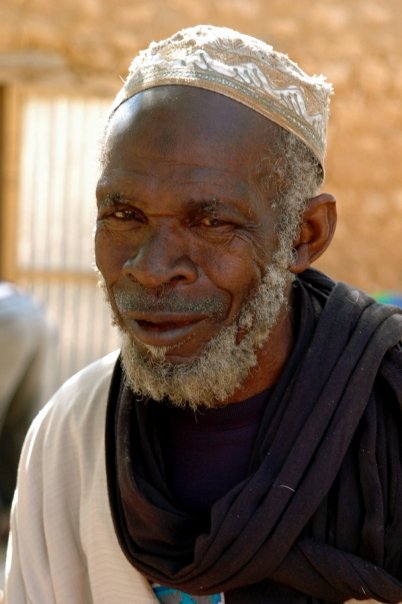
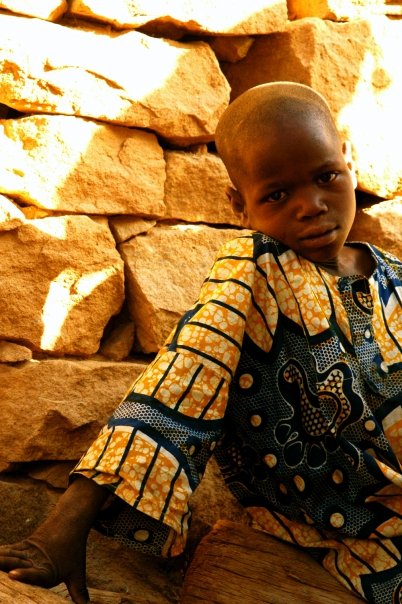
Dogon is a family of about 20 languages, spoken by the Dogon people of the Mopti Region of Mali. Languages and dialects differ widely from commune to commune, though some are mutually intelligible and others bear significant resemblances to one another. Some languages include Donno So, Tommo So, Toro So, Dogolu Dum, Jamsay, Mombo, Tengu-Kan, and many others. We focus on Tommo So, because it is the language of Wadouba Commune, where the majority of our work takes place. Other than greetings, the rudimentary basics of Tommo So seem to be fairly well understood by speakers of Donno So (in and around Bandiagara), and Toro So (Sangha, and the eastern escarpment villages). It is not understood in Yarou Plateau or Kori-Maounde.
On this page, we use our own (rather uninformed) spelling for ease of understanding by the nonlinguist. Hopefully, by listening to the audio pronunciations, you'll get the idea. Knowing even a few phrases will make you popular in Wadouba!
Greetings
As in most Malian languages, greetings are very important and lengthy in Tommo So. It is important to ask multiple questions and respond with questions to someone who has greeted you. Different greetings are used at different times of day.
Morning Greetings
Person arriving | Person responding | |
Aga yameMorning greetings (Let's go into the morning) | ||
AwohAcknowledgement (Indeed)U yaa?Are you in peace? | ||
YaaIn peace | ||
Anawumbe yaa?Is your family in peace? | ||
Yaa | ||
Awoh | ||
U yaa? | ||
Yaa | ||
Anawumbe yaa? | ||
Yaa | ||
Awoh |
Afternoon Greetings
Person arriving | Person responding | |
DenemoAfternoon greetings (We are going into afternoon) | ||
AwohAcknowledgement (Indeed)U denawuh?Are you in peace? | ||
DenawuhIn peace | ||
Anawumbe denawuh?Is your family in peace? | ||
Denawuh | ||
Awoh | ||
U denawuh? | ||
Denawuh | ||
Anawumbe denawuh? | ||
Denawuh | ||
Awoh |
Additional Greetings
U jimile?Are you without sickness? | ||
JimileWithout sickness (Conjugated for first person singular) | ||
Anawumbe djanoui?Is your family in peace? | ||
DjanouiIn peace |
U jimile? | ||
Djanoui | ||
Anawumbe djanoui? | ||
Jimine(Conjugated for third person plural) |
Greetings, Goodbyes, and Thanks
These can be used at any time of day, and they can be used individually (i.e., they do not have to be part of a long sequence).
Person arriving | Person responding | |
U li kal li![I salute] You and the work (to one person) orEh li kal li![I salute] You and the work (to multiple people) orKalpoI salute the work | ||
AwohAcknowledgement (Indeed) | ||
Ambou djele!Welcome (God grant you welcome) | ||
AwohAcknowledgement (Indeed) | ||
Guine doBe at home (welcome) | ||
HayakwiOkay | ||
DaniyeSit down orDombelenSit down | ||
HayakwiOkay | ||
Pinadi segueremoSee you later | ||
HayakwiOkay | ||
Bai yaga segueremoSee you another day | ||
BirepoThank you (for the deed or work) | ||
Birepo baliYou're welcome | ||
DolopoThank you (for the gift) | ||
Dolopo bali.You're welcome | ||
GanaThank you | ||
Gana bali.You're welcome |
Basic Questions
U yaba gwai?Where are you from (where did you leave)? | ||
Mi amerikki gawk. I'm from America. | ||
Bui uwo yangene gede?What's your name? | ||
Bui mmo ____ gede.My name is _____. | ||
U anagudu ange yes?How old are you? | ||
Mi anagudu ____ yeses.I am ____ years old | ||
U yabai yawdew?Where are you going? | ||
Mi damakolo yaden.I'm going in town.Mi guine yaden.I'm going home.Mi ibe yaden.I'm going to market. | ||
Nje kandew?What are you doing? | ||
Kide kama kanilenNothingBire bireksenWorkingDomu domieksenWaitingToyn toynieksenWritingDigen kanaksenTalking (making conversation)Djangu djangaksenStudying | ||
Mbegew?Do you like it? | ||
Eh, mbegen.Yes, I like it.Ai, mbelen.No, I don't like it. | ||
Namagew?Do you want it? | ||
Eh, namagem.Yes, I want it.Ai, namalam.No, I don't want it. | ||
Pamkanew?Do you understand (particular words)? | ||
Eh, pamkenen.Yes, I understand.Ai, pamkanalin.No, I don't understand. | ||
Dogo So egedew?Do you understand Dogon language? | ||
Galeh galeh egeden. Litle by little, I understand. |
Basic Vocabulary
DagaoGood | |
DagaliBad | |
SieGreat | |
EsegoNice | |
EseleNot nice | |
DamaVillage | |
NdePerson | |
AnaMan | |
YanaWoman | |
DiWater | |
DjaaMeal | |
GuineHouse | |
TeneWell | |
SoiClothing/cloth | |
JonA lot | |
MeneA little |
Blessings and Expressions
Amba sie kanaMay God make it go great | ||
Djan li doSafe travels (arrive with peace) | ||
Amba yesie oboMay God give us the future (used when parting until another day) | ||
Amba yogo baitaraMay God give us tomorrow (used when parting until the next day) | ||
Amba ku elel oboMay God give you happiness (a sweet head) | ||
Amba djan li eme denemoMay God let us go into the afternoon with peace | ||
Amba din sie oboMay God give you a good day (used when parting in the morning) | ||
Amba djanli eme segueremoMay God let us meet again in peace | ||
Amba miene sugondoBon apetit (May God let it go down smoothly) | ||
Amina Amen(response to all blessings) | ||
Amba birepoThanks be to God | ||
Amba ire kanaMay god heal you | ||
Ire go ma?Are you better (healthier)? | ||
Eh, ire goYes, I'm better (healthier). | ||
Amba sagu, u sagu.We count on God and we count on you. | ||
Amba nan sagu.We count on God. |